There is something uniquely rewarding about pointing a telescope at a target that looks back at you. Messier 64, famously known as the Black Eye Galaxy, is exactly one of those targets. Located 17 million light-years away, its striking, dark band of dust makes it one of the most iconic spiral galaxies in the night sky. It’d been in my wish list for a while until I thought I had the right gear for the job. I got a decent night from Chennai’s light-polluted skies and I just grabbed it.
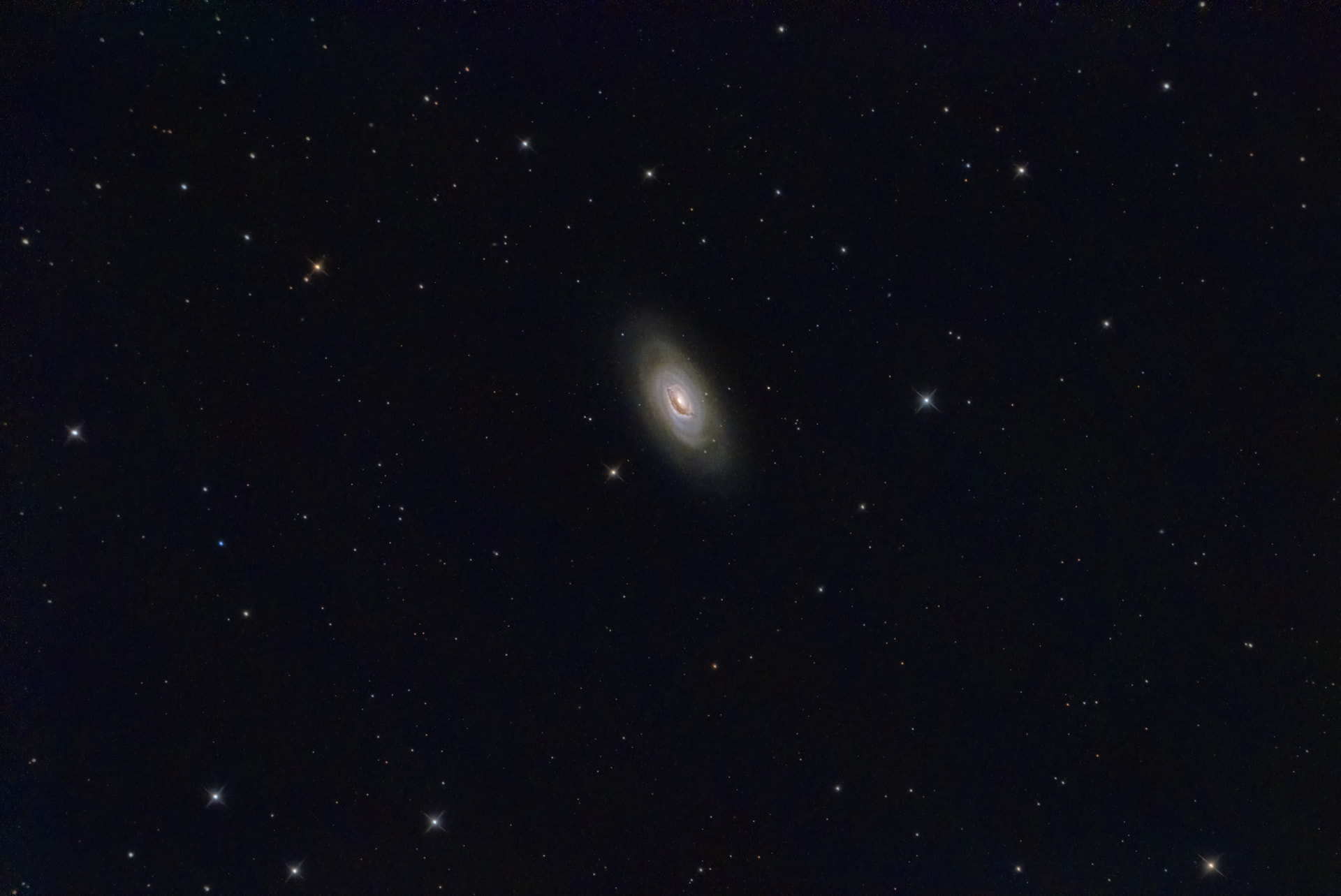
With just 2 hours of data, I can’t complain.
The Science Behind the “Eye”
What makes M64 spectacular is the chaotic cosmic history written into its structure. The prominent dark dust lane is a massive interstellar cloud absorbing the light from the stars behind it.
The real mind-blower? The stars in the inner region rotate clockwise, while the gas and dust in the outer regions rotate in the opposite direction. This counter-rotating anomaly is the footprint of an ancient collision where M64 swallowed a smaller galaxy billions of years ago, or that’s what has been theorized.
Equipment
Scope: GSO Ritchie Chretien 6”
Mount: ZWO AM5N
Camera": ASI2600MC Pro
Data: 132 minutes from Chennai skies
The Irritant
The GSO RC6 is a great scope for the price but it isn’t without it’s flaws. And some are major flaws. I’m trying to fix them one by one and I’ll make a dedicated post in future.