What would be the better choice from a technical standpoint: ASIAIR + ASI2600MC Pro + separate guide camera versus the ASI2600MC Air (all-in-one solution)?
I am already aware of the trade-offs related to cost and the potential single point of failure (SPoF) in the all-in-one setup. My interest is primarily in understanding the technical advantages and disadvantages of each option, particularly in terms of guiding performance, reliability, flexibility, cable management, upgradeability, and overall imaging experience.
You cannot upgrade any one system individually. If you want a more powerful controller, or just more storage, or more USB ports - you cannot - the ASIAir is built into this
The sensor for guiding is on the same position as the imaging camera. This means that if you use a strong filter, it will receive lesser light and make guiding more difficult.
I also believe you need a large imaging circle that is properly corrected for the guiding to work properly.
1 and 2 as stated by you and Siva. It will be easy to use, excellent cable management, good imaging experience etc.
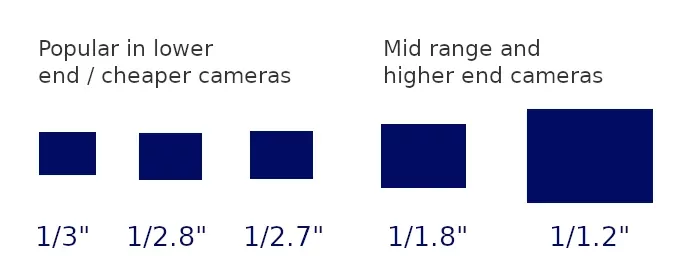
Adding to Siva’s pointers, the integrated guiding camera comes after the filter, which you will have to use (mostly) for anything other than broadband imaging. It comes with a 4um pixel pitch which should be sufficient for anything around 800mm FL IG. However, folks go for the ASI174mm-class guide scopes for longer FL. They have larger sensors (1/2” rather than the 1/8” on the integrated camera) for a larger FOV for finding stars and larger pixel size of 5.86mm which helps a lot at long FLs (large pixels are generally more sensitive to light which is what we want for guiding).
ASI120mm mini guide cam / ASI224MC cam have 3.75um pixels with 1.3” sensor size. ASI220mm mini and the integrated guiding cam in the Air come with 4um pixels and 1/1.8” sensor size, which is a tradeoff. The ASI174MM-class guiders come with even larger pixel size with 5.86um pixel size and 1/1.2” sensor size with a wider FoV.
All these cameras with different sizes may work in most focal lengths as long as the sky condition allows it. However, most of the times, we need to have the max sensitivity and FoV that we can afford so that guiding works as it should.
For focal lengths less than around 500 - 600mm, a separate guide scope is generally sufficient. For mirror-based scopes where mirror shift can occur, an OAG is recommended because both cameras will see the mirror shift. For longer FLs, an OAG is generally recommended because stars can look oblong due to differential flexure between the main scope and the guide scope. For Cameras with in-built guide cameras, this is generally isn’t an issue. However, these “Duo“ cameras may not be able to read enough stars with (dual)narrowband filters.
Having said that, if you are staring off with non-smart scope AP, it’s highly recommended to start with a short FL refractor. or the Rokinon/Samyang 135 F2.
OAGs still suffer from star starvation even at low FL.For shorter FL refractors, a separate guide scope is better as it involves almost no initial set up and the guide camera will look at a wider FoV. Differential flexure is not an issue at these FLs. The main reason for OAG is at long FLs, differential flexure and mirror flop/shift. These, most of the times, cause star trails and unsharp DSOs.
Too many variables to consider here. But generally, the 30mm will be good for short FL in the main imagining train, like the 135 F2 as the small guider has short FL too. For longer FL the 50mm or even the 60mm.
I’m not even getting into pixel scale of the guiding and main train here.
The general rule of thumb is the FL of the guide scope should be around 1/3 of the FL of the main scope. But the more precise way is to have the pixel scale ratio between the main and guide scope to be under 5, even better under 3.
And depending on these variables, you may have to choose the correct camera too with matching pixel pitch. And again, as generally gross explanation, use a camera with a smaller pixel pitch with the guider for short FL main scope and vice versa.